Platform comparison
| Platform | YES odds | NO odds | Fee | KYC | Settlement | |
|---|---|---|---|---|---|---|
Polymarket (via Polymarket Alternative UK) Pick polygram.ink (preferred broker) |
4% | 96% | 0% (USDC on-chain) | No-KYC up to $1,500 | USDC, auto via UMA oracle | View on Polymarket → |
Polymarket (direct) polymarket.com |
4% | 96% | 0% | Geo-blocked in US/UK/EU | USDC, on-chain | View on Polymarket → |
Kalshi kalshi.com |
— | — | Up to 7% per trade | US-only, KYC required | USD | View on Polymarket → |
Betfair Exchange betfair.com |
— | — | 2-5% commission | Full KYC from first trade | GBP / EUR | View on Polymarket → |
Manifold Markets manifold.markets |
— | — | Play-money (mana) | None — play-money | Mana (no cash-out) | View on Polymarket → |
Market context
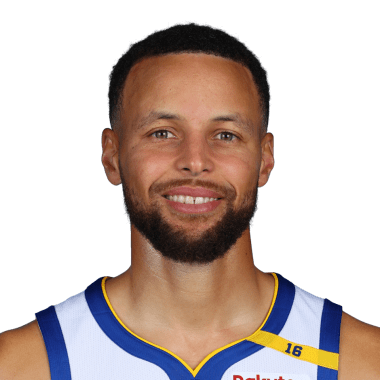
Polymarket is pricing Stephen Curry leaving the Warriors at **4% YES**, and on-chain that means users are still assigning a very high likelihood that he remains rostered through the October 2026 settlement cut-off, with positions settled in USDC on Polygon through conditional tokens. The contract is unusually specific: it resolves **Yes** only if Curry is no longer on Golden State’s official roster before 22 October 2026, whether by retirement, release, trade or any other roster change, so the market is really about roster status rather than playing time or injury.
The historical frame is straightforward: this is a veteran-superstar continuity trade, and recent reporting points in the same direction. Curry agreed a one-year, $62.6 million extension in 2024 that keeps him under contract through the 2026-27 season, and the Warriors publicly said they want him to finish his career in Golden State.[2][12] That makes an in-season departure before the settlement date a low-frequency event unless the team pivots sharply on contention, salary structure or Curry himself changes course. Coverage in early 2026 also noted mutual interest in another extension when eligible, which reinforces the baseline that the current roster spot is intact.[5][11]
For traders, the main catalysts are not day-to-day game results but roster and contract milestones. Watch for any extension talks around eligibility dates, formal team statements, trade speculation tied to the Warriors’ broader cap picture, and roster moves around the 2026-27 season opener and trade window. Reporting has already highlighted that Curry’s deal and the rest of Golden State’s veteran core leave the club with multiple large salaries and potential pressure points later in the year.[8][13] Short of a retirement announcement, a major injury-driven decision, or an explicit trade/release signal from the Warriors, the market’s low YES price implies participants currently view a roster exit as unlikely.
Methodology
This page reviews NBA: Stephen Curry to leave Warriors? across five venues. The live probability is the Polymarket mid-price, sourced directly from the on-chain Polygon order book; the comparison columns benchmark each venue on fee structure, KYC, settlement currency and payment rails. Every CTA routes to Polymarket Alternative UK, which mirrors the Polymarket order book at 0% fees.
Resolution & payout
Settlement runs on-chain. Polymarket's contract logic separates YES and NO shares as conditional tokens; at resolution the winning share lifts to $1.00 and the losing one to $0. The outcome input comes from the UMA Optimistic Oracle, which secures against bad resolution with a bond + dispute window.
Once finalised, the smart contract pays USDC to the holders' wallets within minutes — no withdrawal fees beyond Polygon network gas. Kalshi settles in USD via CFTC clearance, Betfair in account currency net of commission, Manifold in play-money mana with no cash-out.
FAQ
- Where can I trade this market with the lowest fees?
- Polymarket is geo-blocked in the US/UK/EU. The easiest 0%-fee broker into the same order book is Polymarket Alternative UK. Kalshi charges up to 7% per trade; Betfair Exchange takes 2-5% commission on net winnings.
- How does resolution work?
- Through the UMA Optimistic Oracle on Polygon: a proposer submits the outcome, a two-hour challenge window opens, and USDC payouts settle automatically once the result is final.
- What's the difference between YES and NO shares?
- A YES share pays $1.00 if the event happens, $0 otherwise. A NO share pays $1.00 if the event doesn't happen. The market price between 0¢ and 100¢ is the implied probability.
- Do I need to KYC for this market?
- On Polymarket directly, no — it's wallet-based. Intermediary brokers like Polymarket Alternative UK trigger KYC only above $1,500 of lifetime trading volume; under that you trade pseudonymously with a single wallet address.
- How reliable are the quoted odds?
- The YES/NO percentages are the live mid-prices of the Polymarket order book. On deep markets they move every few seconds; on thinner ones you'll see short plateaus.
%22%2F%3E%3Cpath%20d%3D%22M%206%2066%20A%2026%2026%200%200%201%2058%2066%22%20fill%3D%22%23E6B98D%22%20opacity%3D%220.9%22%2F%3E%3Ccircle%20cx%3D%2232%22%20cy%3D%2226%22%20r%3D%2222%22%20fill%3D%22%23F5CBA7%22%2F%3E%3Cpath%20d%3D%22M%2010%2026%20A%2022%2028%200%200%201%2054%2026%22%20fill%3D%22%23ffffff%22%20opacity%3D%220.9%22%2F%3E%3C%2Fsvg%3E) and
and%22%2F%3E%3Cpath%20d%3D%22M%206%2066%20A%2026%2026%200%200%201%2058%2066%22%20fill%3D%22%23E6B98D%22%20opacity%3D%220.9%22%2F%3E%3Ccircle%20cx%3D%2232%22%20cy%3D%2226%22%20r%3D%2222%22%20fill%3D%22%23F5CBA7%22%2F%3E%3Cpath%20d%3D%22M%2010%2018%20Q%2016%204%2026%2010%20Q%2020%202%2032%206%20Q%2044%202%2038%2010%20Q%2048%204%2054%2018%22%20stroke%3D%22%23ffffff%22%20stroke-width%3D%224%22%20fill%3D%22none%22%20stroke-linecap%3D%22round%22%2F%3E%3C%2Fsvg%3E)
Trade NBA: Stephen Curry to leave Warriors? on Polymarket Alternative UK
Live order book, 0% fees, USDC settlement in seconds.
Open live market →